Trump's Ultimatum: 10-Day Deadline and Tariffs Spark Diplomatic Crisis
- Aug 1, 2025
- 3 min read
Updated: Aug 2, 2025
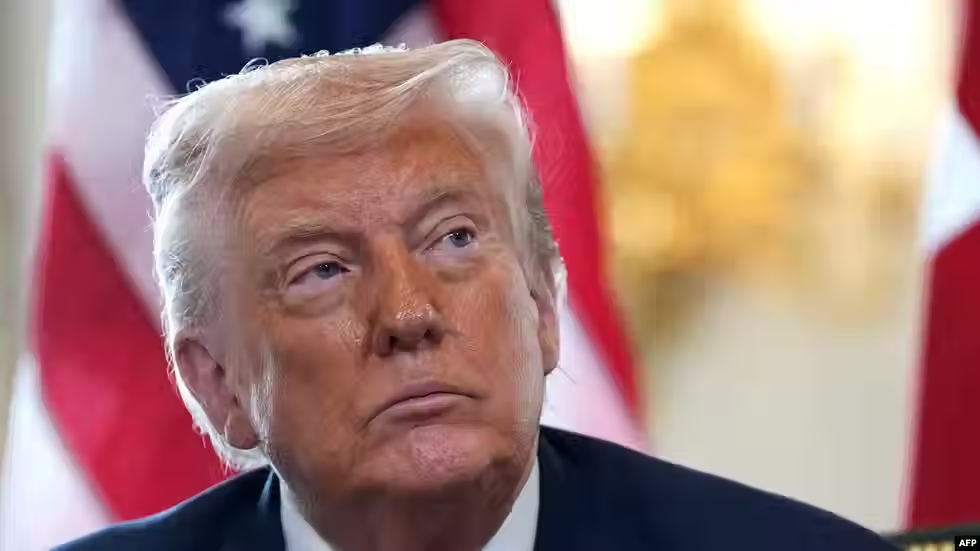
The conflict in Ukraine has entered a new phase of diplomatic tension following a series of aggressive statements from U.S. President Donald Trump, who has given Russia a 10-day deadline to reach a peace agreement. This ultimatum, coupled with a threat of new tariffs, has sparked sharp reactions from Moscow and a new round of geopolitical friction.
A Shortened Deadline and New Tariffs
On July 30, President Trump announced that he was shortening the 50-day deadline he had previously set for a ceasefire in Ukraine to just 10 days. The announcement was made in an audio recording of a conversation with journalists, which was posted on the White House's YouTube channel.
According to Trump, if an agreement is not reached by the new deadline, the U.S. will impose 100% tariffs on exports from Russia to the U.S., as well as on exports from countries that continue to trade with Russia. These restrictions could potentially impact major economies like China, European Union countries, India, and Turkey. Trump expressed confidence that these tariffs would not impact global oil prices, asserting that the U.S. could increase its own production.
The president also revealed his frustration with Russian President Vladimir Putin, stating that he was "very disappointed" and believed Putin "clearly wants the war to continue."
A New Approach to Sanctions and Diplomatic Fallout
The proposed tariffs represent a significant shift in U.S. sanctions policy, a change supported by influential Republican Senator Lindsey Graham. On July 31, Graham wrote on the social network X that President Trump is "changing the rules of the game" by targeting countries that buy Russian energy resources and therefore "support your war machine."
This new hardline stance was met with a fiery response from Dmitry Medvedev, the Deputy Chairman of the Russian Security Council. In a post on X, Medvedev warned that such actions "bring a war between Russia and the US closer." He also stated that Russia would not be dictated to, and that "negotiations will only conclude after all the goals of our military operation have been achieved."
President Trump responded to Medvedev's threat on his "Truth Social" account, writing: "Tell the man who still considers himself president, but is a failed former president—Medvedev—to watch his words. He is entering very dangerous territory!"
Despite this heated rhetoric, Russian presidential spokesperson Dmitry Peskov offered a more measured response, saying that Moscow had "noted" Trump's statement and that a possible meeting between the two leaders was not currently on the agenda. Peskov's comments on the matter were also notable for calling North Korea, Iran, and China Russia's "allies," a statement that seemingly contradicts a previous declaration by Russian Foreign Minister Sergey Lavrov that Russia had no allies in its fight against the West.
Military and Humanitarian Developments
While diplomatic tensions rise, the conflict on the ground continues to escalate. On July 31, the Russian Ministry of Defense claimed to have captured the strategically important city of Chasiv Yar in the Donetsk region. The Ukrainian government has not officially confirmed this claim, and an independent analysis by the OSINT project "Deep State" indicates that parts of the city remain a "gray zone" and are not yet under Russian control. Ukrainian military officials have previously acknowledged that capturing Chasiv Yar would give Russia a significant strategic advantage.
Meanwhile, on the night of July 30-31, Russia launched missile and drone strikes on Kyiv, resulting in a devastating civilian toll. The head of the Kyiv City Military Administration, Timur Tkachenko, reported that at least 8 people were killed, including a 6-year-old child, and 82 were wounded. One entrance of a nine-story residential building was completely destroyed in the attacks.
Amid the ongoing conflict, President Trump confirmed that his administration will allow Ukrainian citizens to remain in the U.S. until the war ends. This comes after a spring 2025 incident where some Ukrainians mistakenly received emails warning them to leave the country. A Department of Homeland Security spokesperson later clarified that the emails were sent by mistake and the U4U (Uniting for Ukraine) program remains active. According to a Forbes report, over 187,000 Ukrainians have arrived in the U.S. through the program since the start of the full-scale invasion.
This combination of diplomatic ultimatums, public threats, and continuous military action underscores a volatile new phase in the war, with an uncertain path forward for all parties involved.


Comments