Azerbaijan-Russia Relations at a Breaking Point: Political Tensions, Economic Squeeze, and Human Costs
- Aug 1, 2025
- 4 min read
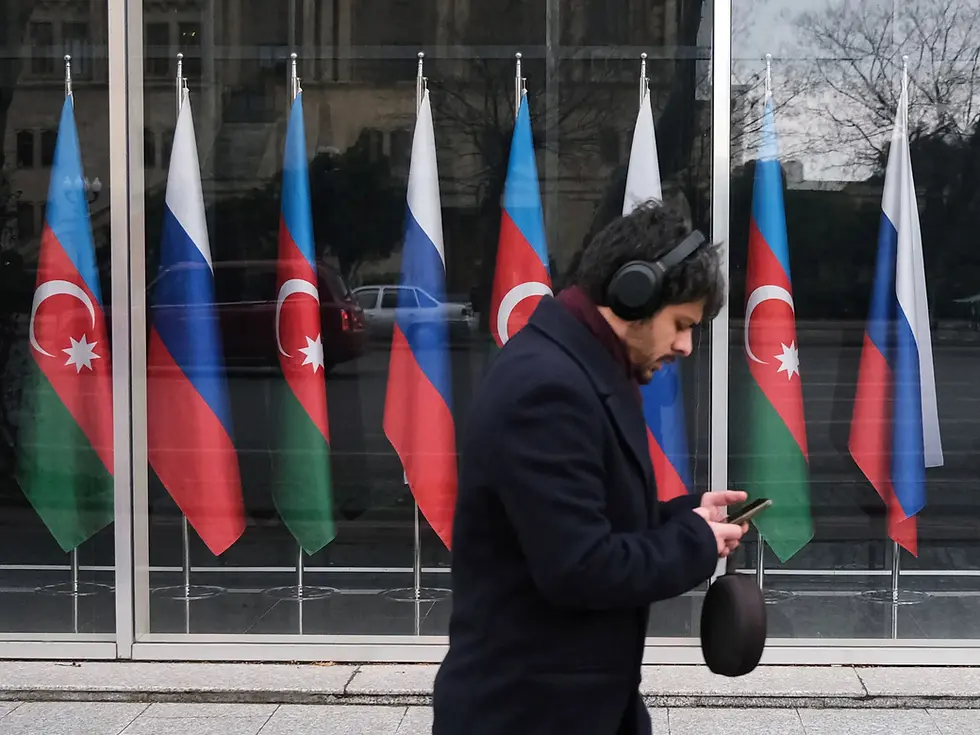
Recent events have plunged the relationship between Azerbaijan and Russia into a period of unprecedented tension. What began with the downing of an Azerbaijani plane has rapidly escalated into a multifaceted crisis involving diplomatic clashes, economic pressures, and a crackdown on citizens, highlighting the fragile and imbalanced nature of the two countries' strategic alliance.
The Events in Yekaterinburg and the Political Fallout
The current crisis was seemingly triggered by a military incident, as a plane belonging to Azerbaijan's national airline, AZAL, was shot down in Russian airspace over Grozny. In a public statement, Azerbaijani President Ilham Aliyev demanded that Russia pay compensation to the victims' families and for the aircraft, threatening to take the matter to an international court if they refused.
Instead of paying compensation, Russia responded with what Azerbaijani media described as a "crusade" against Azerbaijani citizens. On June 27 and 28, Russian law enforcement agencies conducted operations in the city of Yekaterinburg, detaining more than 50 people of Azerbaijani origin. Tragically, two of the detainees later died, and a prominent Azerbaijani diaspora leader in the Urals, Shahin Shikhlinski, and his son, Mutvali Shikhlinski, were detained. While Shahin Shikhlinski was initially released, a warrant for his arrest was later issued on July 30, and his son remains in a pre-trial detention center on charges of "use of force against a representative of authority."
In a retaliatory move, Azerbaijan's Prosecutor General's Office opened a criminal case regarding the torture and death of its citizens in Russia. The Azerbaijani government also detained several Russian citizens, including programmers and journalists from "RT" and "Sputnik Azerbaijan." The foreign ministries of both countries have since expressed "dissatisfaction and concern" over the escalating situation.
Amid the growing tensions, Russian Foreign Ministry spokeswoman Maria Zakharova made a statement on July 30, accusing Ukraine of attempting to "incite national hatred" between Russia and Azerbaijan. She alleged that Ukraine was planning "diversionary attacks" against Azerbaijani citizens in Russia to create the impression of Russian aggression and spread disinformation in European media. She also warned both Azerbaijan and Armenia against deepening their ties with NATO, framing the alliance as a "colonialist" force that brings "confrontation" and "military tension."
The Economic Squeeze
Beneath the political rhetoric, the conflict highlights a significant economic imbalance. Russia is Azerbaijan's third-largest trade partner, with trade turnover reaching $4.8 billion in 2024. However, as expert Vahid Maharramli points out, while Azerbaijan is heavily dependent on the Russian market for a significant portion of its non-oil exports and imports, its share of Russia's total trade is a negligible 0.6%. This gives Russia a powerful economic lever.
Recent developments show this lever is already being used. The European Union and the United Kingdom have sanctioned Azerbaijani state-owned ships and individuals for their alleged involvement in the illegal transport of Russian oil, and Russia has limited its grain exports to Azerbaijan. This has forced Azerbaijan to seek alternatives, such as importing most of its wheat from Kazakhstan.
Maharramli notes that this is not the first time Russia has used its economic influence against Azerbaijan. He recalled a period years ago when Russia frequently returned Azerbaijani agricultural products on various pretexts, causing millions of dollars in losses to Azerbaijani farmers. He also highlights a persistent issue with the competitiveness and quality of Azerbaijani agricultural products, which makes finding stable alternative markets difficult.
An Imprisoned Voice: Tofig Yagublu's Critique
Writing from prison on July 30, opposition member Tofig Yagublu offers a scathing critique of both the Kremlin's actions and the Azerbaijani government's hypocritical response. He calls it "ridiculous and absurd" for Ilham Aliyev to host a "Shusha Media Forum" on media freedom while independent journalists are jailed in his own country.
Yagublu draws a sharp parallel between the two governments, accusing Azerbaijani officials of "disgusting" hypocrisy for criticizing Russia's dismissal of TASS official Mikhail Guzman while ignoring their own government's similar actions. He cites numerous examples of the Azerbaijani government's suppression of media and opposition, including shutting down the APA news agency and ANS television.
Yagublu also contrasts Aliyev's recent, more resolute support for Ukraine's territorial integrity with his past actions. He reminds readers that on the day Russia annexed Donetsk and Luhansk in 2022, Aliyev signed a strategic partnership with Putin. Yagublu also notes that Aliyev promoted Vilayat Eyvazov, the official who led the brutal crackdown on protestors in 2003, in a similar fashion to how a Russian general who ordered the downing of a plane was promoted.
"It is simply necessary to say that the Russian government, like the Azerbaijani government, is an enemy of democracy, human rights, the rule of law, and everything that is progressive and just," Yagublu writes, encapsulating the sentiment that for many, the conflict is not a battle of good versus evil, but a clash between two similar authoritarian regimes.
The mounting tensions between Russia and Azerbaijan are multifaceted, encompassing political disputes, retaliatory arrests, and significant economic vulnerabilities. The crisis serves as a stark reminder of the complex and often precarious nature of international relations, particularly when there is a significant power imbalance. While Russia appears to be using its economic and diplomatic leverage to pressure Azerbaijan, the political fallout and human costs on both sides remain unclear.



Comments