Armenia Navigates Geopolitical Crossroads Amidst US Corridor Proposal and Internal Strife
- Jul 20, 2025
- 5 min read
Updated: Aug 2, 2025

Yerevan, Armenia – Armenia finds itself at a critical juncture, balancing a proposed US-backed transport corridor, deepening ties with the European Union, a strained relationship with Russia, and escalating internal political conflicts. Recent developments highlight Yerevan's determined push for a new geopolitical alignment while grappling with persistent domestic challenges.
The most significant recent development is a proposal from the United States to lease a crucial 32-kilometer section of a planned transport corridor connecting Azerbaijan's mainland with its exclave of Nakhchivan through Armenian territory. US Ambassador to Turkey, Tom Barrack, stated on July 11 and 12 in New York that the US could lease this road for one hundred years, with a US commercial company managing its logistical operations as a neutral guarantor.
Ambassador Barrack emphasized the protracted nature of the dispute, noting, "They are disputing over a 32-kilometer road, but this is not an insignificant issue. This dispute has been ongoing for ten years." He suggested that America could "take this on," allowing both sides to use it jointly. This marks the first official confirmation of a plan originating from the Trump administration. A Carnegie Endowment report suggests this plan is based on an earlier EU proposal, aiming to provide security guarantees for Baku while preserving Yerevan's sovereignty, drawing inspiration from international control precedents in Georgia's separatist regions. Regional sources indicate Turkey initially floated the idea of private company management.
Armenian Prime Minister Nikol Pashinyan has offered a nuanced response to the US proposal. While not ruling out the possibility of leasing the transport infrastructure, he stressed that it is merely "one of the options being discussed with Azerbaijan." Speaking on July 16 and 18, Pashinyan drew parallels to existing outsourcing arrangements in Armenia, such as the management of Zvartnots Airport, the water supply system, and Armenian Railways, emphasizing that in all these cases, the property remains under the ownership of the Republic of Armenia.
However, Nazeli Baghdasaryan, Pashinyan's spokesperson, on July 15, officially denied claims that the US would take over management, stating that Armenia discusses regional communications only "within the framework of its sovereignty, territorial integrity, and jurisdiction." She added that Armenian law permits land leasing only for agricultural purposes, making the US Ambassador's specific proposal "legally impossible."
Pashinyan also addressed the "Zangezur Corridor" terminology, which he noted causes an "allergic context" in Armenia due to its implications of extraterritoriality. He clarified that for international partners, the term is acceptable and does not signify a loss of territorial sovereignty. He assured the public that any road opening would strictly adhere to principles of state sovereignty, jurisdiction, reciprocity, and equality.
The Prime Minister reiterated Armenia's broader "Crossroads of Peace" initiative, which envisions not only road and rail connections but also oil and gas pipelines, power lines, and telecommunication cables. He highlighted its significant investment potential and Armenia's readiness to simplify border crossing procedures to attract international investors and transform Armenia into a regional transit hub.
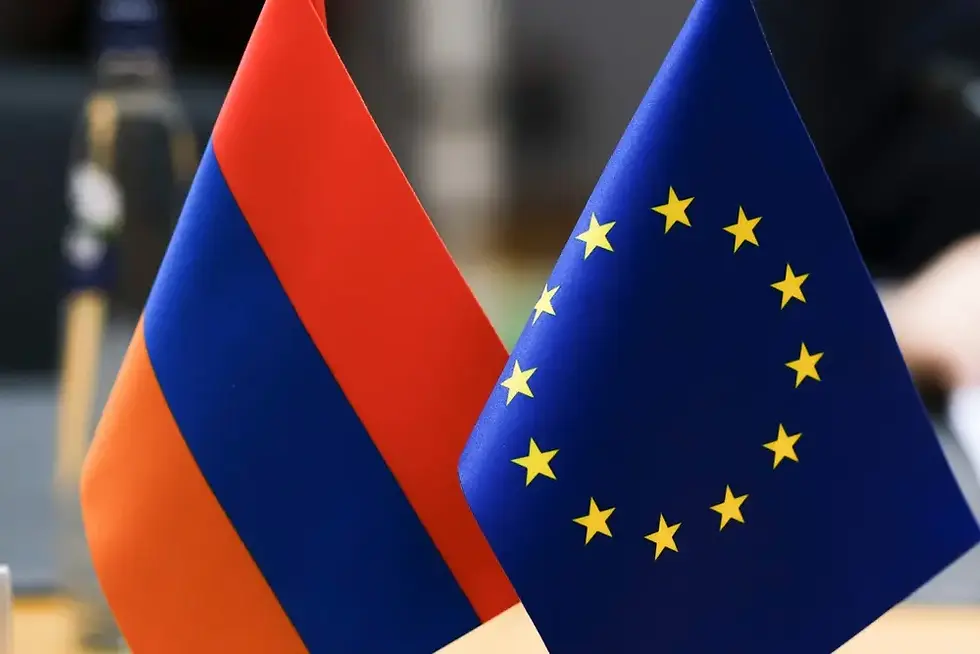
Beyond the corridor discussions, Armenia is actively pursuing closer integration with the European Union. Following meetings in Brussels on July 14, EU Council President António Costa and European Commission President Ursula von der Leyen confirmed increased EU investment in Armenia, reaching €2.5 billion under the "Global Gateway" strategy. This includes a €270 million Resilience and Development Plan aimed at economic reforms and investments in various sectors. The EU leaders also expressed strong support for Armenia's sovereignty, territorial integrity, and democratic reforms, welcoming progress in visa liberalization and a new Partnership Agenda.
Pashinyan openly confirmed Armenia's desire to join the EU, stating, "Yes, Armenia wants to join the European Union." While acknowledging the complexity of the process, he expressed confidence that Armenia would become an EU member in 20 years, regardless of immediate accession, as the country is committed to aligning with European standards.
Concurrently, Armenia's relationship with Russia is undergoing a "transformation." Pashinyan indicated that Armenia's participation in the Russia-led Collective Security Treaty Organization (CSTO) is "frozen," and withdrawal is "more likely than restoring membership." He criticized the CSTO for failing to fulfill its security obligations to Armenia in 2021 and 2022. Despite this, Pashinyan expressed a desire for "good, even better" relations with Russia, while cautioning against anti-Armenian content on some Russian television channels broadcast in Armenia, which he believes are attempting to force Yerevan's hand.
Domestically, Armenia faces significant challenges, particularly concerning the fate of Karabakh Armenians and growing political opposition. The Armenian government has refused to meet the demands of Karabakh refugees, including comprehensive housing assistance. The Council for the Protection of the Rights of Karabakh Armenians reported that street protests yielded no results, with the government making only "cosmetic changes" to social programs. Ombudsman Gegam Stepanyan noted that over 20,000 Karabakh Armenians have left Armenia since 2020 due to unmet needs.
In a strong move, the Armenian Prosecutor General's Office has filed a lawsuit to annul the registration of the unrecognized "Nagorno-Karabakh representation" building in Yerevan, which served as a gathering point for former officials and a resource for refugees. Pashinyan firmly stated on July 17 that he "cannot allow a second state within the Republic of Armenia," warning that such an entity could be used by Azerbaijan as a pretext for military action against Armenia. This action has been criticized by former "Nagorno-Karabakh" officials like Artak Beglaryan, who called it a "political order" and an act of "revenge" by Pashinyan and Azerbaijani President Ilham Aliyev to "destroy everything related to Artsakh (Karabakh)."
Adding to the internal tensions, Russian-Armenian billionaire Samvel Karapetyan, owner of Tashir Group and Electric Networks of Armenia (ENA), was arrested on June 18 on charges of money laundering and calls to seize power. His defense committee has labeled the accusations "groundless" and politically motivated, linking them to his support for the Armenian Church in its conflict with Pashinyan. Following Karapetyan's arrest, the Armenian parliament passed legislation allowing the nationalization of ENA, a move Pashinyan attributes to public dissatisfaction with the company's services, not political retribution. Karapetyan has announced plans to form a "fundamentally new political force."
Pashinyan's conflict with the Armenian Apostolic Church has also escalated, with at least 15 people arrested on coup attempt charges, including Archbishop Bagrat Galstanyan, leader of the anti-government "Holy Struggle" movement. Pashinyan has accused the Catholicos of violating his vow of celibacy and fears church property could become personal, vowing "very strict, but legal" steps to prevent this.
Armenia is navigating a complex web of regional and internal dynamics. The US proposal for the Zangezur Corridor, while potentially a step towards regional connectivity, highlights the deep-seated mistrust and sovereignty concerns between Yerevan and Baku. Simultaneously, Armenia's clear pivot towards the European Union signals a significant shift in its foreign policy, even as it seeks to manage its evolving relationship with traditional ally Russia. Internally, the government faces mounting pressure from Karabakh refugees and a determined political opposition, including prominent figures like Samvel Karapetyan and the Armenian Church. The coming months will be crucial in determining whether Armenia can successfully manage these multifaceted challenges and solidify its new geopolitical trajectory while ensuring domestic stability.


Comments