US Proposal Sparks Debate: Will Nakhchivan Route Deepen or End Armenia's Blockade?
- Jul 21, 2025
- 4 min read
Updated: Jul 22, 2025

A recent proposal from the United States to unblock regional transportation routes, specifically a road connecting mainland Azerbaijan with its exclave of Nakhchivan through Armenia's Syunik region, has ignited intense debate and revealed divergent perspectives in both Armenia and Azerbaijan. While Azerbaijan insists on unhindered passage, Armenia grapples with concerns that a partial unblocking could deepen its existing blockade rather than alleviate it.
The long-standing Karabakh conflict, which escalated in the 1980s and led to clashes between Azerbaijan and Armenia, saw Azerbaijan's Karabakh region and seven surrounding districts occupied in the early 1990s. Following a 44-day war in 2020 and a one-day military operation in 2023, Baku restored its sovereignty over all its territories. Despite ongoing negotiations in various formats, a comprehensive peace agreement has yet to be signed, though the parties announced in March 2025 that all articles of the agreement had been agreed upon.
A key point of contention has been the proposed land connection to Nakhchivan. Azerbaijan refers to this route as the "Zangezur corridor," while Armenia views it as a "territorial claim." Although the issue of opening communication lines was initially part of the draft peace agreement, it was mutually removed in August 2024.
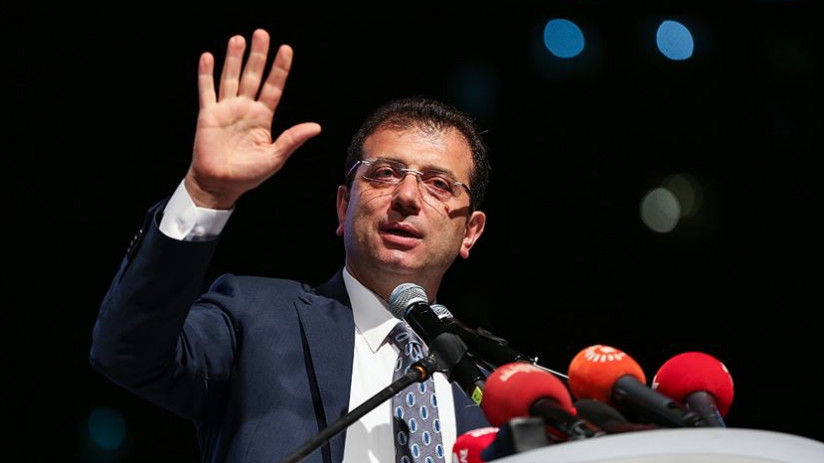
President Ilham Aliyev, speaking at the 3rd Shusha Global Media Forum on July 19, addressed the US proposal and Armenia's reaction. He firmly stated that the question should be directed at the Armenian leadership, emphasizing, "There can be no operator, no trader, no lessee on our territory. What does Armenia want to do? They can do many things, I don't know about that." Aliyev underscored Azerbaijan's primary concern: "the main issue for them is that... there must be unhindered and secure passage from Azerbaijan to Azerbaijan."
Armenian Prime Minister Nikol Pashinyan confirmed receiving proposals from the US and other friendly countries regarding the Syunik (Zangezur) road. He highlighted a crucial aspect of these discussions: "all issues under discussion are conducted based on the territorial integrity, sovereignty, and jurisdiction of the Republic of Armenia." Pashinyan has also championed Armenia's own initiative, the "Crossroads of Peace" project, which he describes as having "tremendous investment potential" and envisions as the framework for the unblocking process.
However, the parliamentary opposition in Armenia expresses significant reservations. They argue that the current US plan does not aim to end Armenia's blockade but merely to establish a transport corridor connecting mainland Azerbaijan with Nakhchivan, which they see as a concession to Azerbaijan and Turkey. Political analyst Areg Kochinyan echoed this sentiment in an interview with Public Television, stating, "If we do not receive guarantees and cannot be sure that the construction and launch of this road will immediately and unconditionally lead to the lifting of Armenia’s blockade, then the entire discussion is meaningless."
The Armenian government maintains that any unblocking must adhere to four principles: sovereignty, jurisdiction, territorial integrity, and reciprocity. While Prime Minister Pashinyan has addressed these principles multiple times, the issue of reciprocity presents a unique challenge, as he noted: "There is a railway on Azerbaijani territory, but there is none on ours." He stressed that the investment component of any program is particularly crucial for Armenia.
Anna Grigoryan, a deputy from the "Hayastan" faction, articulated the opposition's conviction that Washington’s proposal does not imply an end to Armenia’s blockade or an expansion of its economic opportunities. She questioned how the discussion about regional unblocking narrowed to only the Meghri road and its control, asserting, "This is merely satisfying the demands of Azerbaijan and Turkey." While Pashinyan initially left unanswered whether all roads would be unblocked simultaneously, he clarified in a March 2025 article that "Connecting Azerbaijan to Nakhichevan through Armenian territory is a subtopic of the broader issue of unblocking regional transport routes. Armenia has never obstructed this matter."
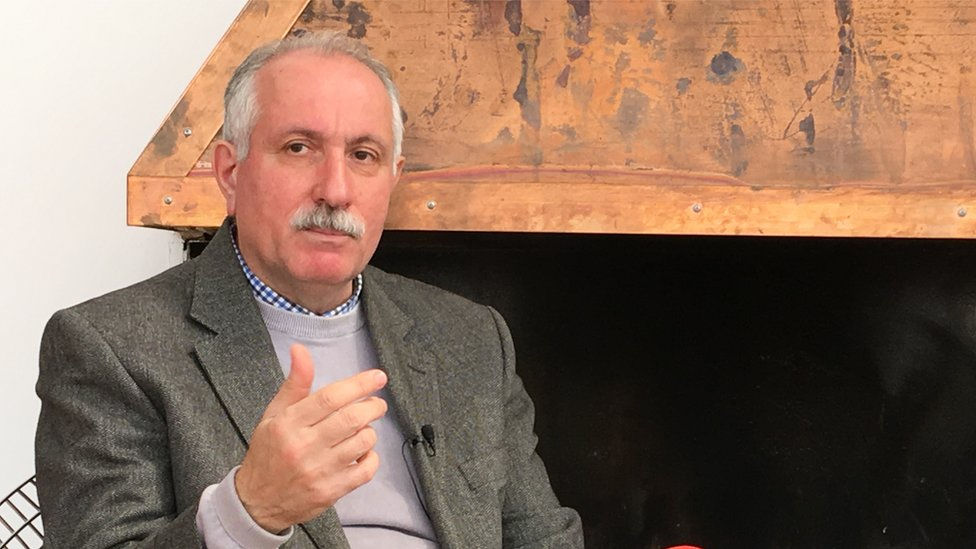
Political analyst Areg Kochinyan provided further insight into the US proposal. He explained that it "envisions a private company receiving the right to build specific infrastructure — including highways, railroads, and gas pipelines — on designated plots of land." Crucially, this would occur "without transferring ownership of the land or altering its legal — let alone international — status. In essence, it would amount to a contractual obligation taken on by the contractor."
Kochinyan detailed that the proposal involves stages for operation, maintenance, and management, as well as ensuring security along the route. He believes that Armenia's police and security services would retain full authority to "enforce legal order" and that the route would remain under Armenian customs and passport control. He views this proposal not only as an example of American capital investment but as a tangible Armenian-American initiative.
Kochinyan considers the American proposal significantly more favorable for Armenia than the Russian alternative. He recalled Moscow's interpretation of the November 2020 trilateral statement, which ended the Second Karabakh War, noting that "The Russian proposal was much stricter and more dangerous in terms of violating Armenia’s borders. According to Russia’s reading of the agreement, armed Russian security forces were to be stationed along the route — with FSB personnel deployed every 100 meters." He also highlighted that the Lachin Corridor was initially intended to mirror the route through Meghri in Armenia’s south.
However, the geopolitical landscape has shifted following the exodus of Armenians from Nagorno-Karabakh. Turkey and Azerbaijan now advocate a step-by-step approach: if Armenia desires to reopen its borders with them, the first step must be the opening of the road linking Nakhchivan with the rest of Azerbaijan.
Areg Kochinyan is adamant that Yerevan should prioritize its broader "Crossroads of Peace" project and the full unblocking of regional infrastructure. He concludes with a stark warning: "If this road does not automatically lead to the opening of all other routes, then the entire conversation is irrelevant for Armenia. Under such circumstances, the blockade will only deepen."
The complex negotiations surrounding regional unblocking continue, with the US proposal adding another layer to the intricate geopolitical dynamics of the South Caucasus. For Armenia, the critical question remains whether any proposed route will genuinely contribute to comprehensive regional integration or inadvertently solidify its isolated position.

Comments