The EU’s New Partnership Mission in Armenia
- Apr 23
- 2 min read
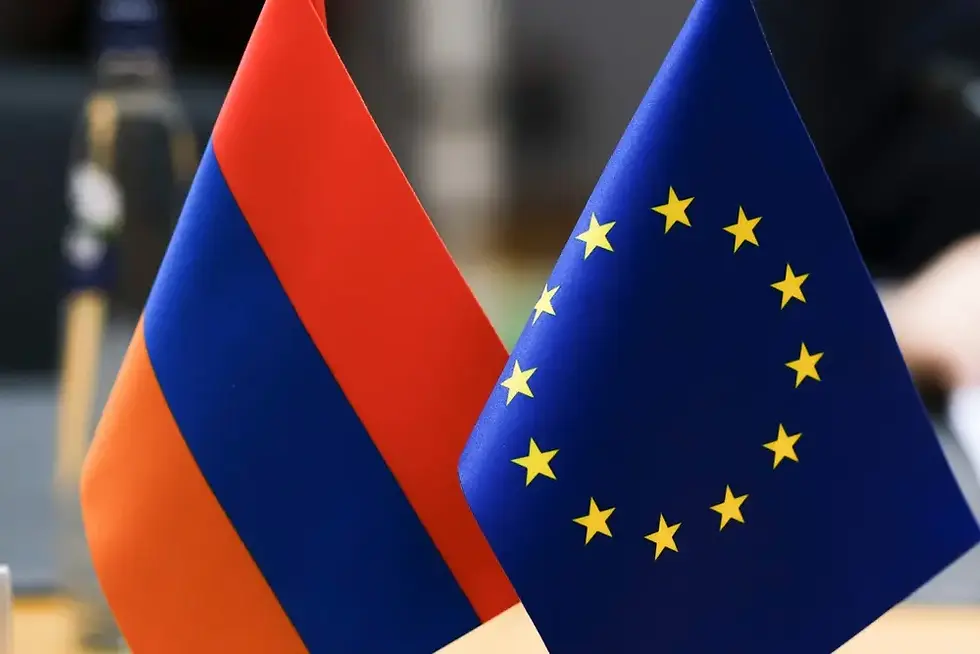
On April 21, the European Union's Foreign Affairs Council officially approved a significant new civilian initiative: the EU Partnership Mission in Armenia (EUPM Armenia). This action, formally requested by Yerevan in December, marks a deeper strategic relationship between the Armenian government and Brussels. With an initial two-year mandate, the mission aims to strengthen Armenia's state institutions against the increasingly complex challenges of modern security.
The main goal of EUPM Armenia is to improve the country's ability to withstand "hybrid threats." These include various non-traditional forms of warfare, such as foreign information manipulation, cyberattacks, and tracking illegal financial flows in political and electoral situations. A team of about 20 to 30 experts based in Yerevan will provide strategic advice and operational support, working closely with Armenian ministries to protect the country's democratic processes.
A key point of interest for international observers is the upcoming parliamentary elections on June 7. While official documents remain neutral about where these threats come from, diplomats and journalists have noticed a clear similarity to the "Moldova model." In Moldova, similar EU support helped state institutions find and stop foreign disinformation campaigns, which allowed pro-European groups to maintain stability despite outside pressure. European officials hope to achieve the same success in Armenia, ensuring that the country's future is decided by its citizens without outside interference.
However, the mission comes at a complicated time politically, both within Armenia and in the region. In Armenia, the ruling party emphasizes a practical approach, noting that while their risk assessment matches the EU's, their diplomatic language must be careful to avoid creating new problems. Meanwhile, some opposition groups worry that the EU's involvement might be used to sideline rival political groups. Externally, the Kremlin has already expressed its disapproval, warning against a "Moldova scenario" and advising the Armenian government not to exclude pro-Russian voices from politics.
This is not Armenia's first experience with EU monitors. It joins the existing EU Mission in Armenia (EUMA), a larger border-monitoring force created in 2023 to maintain stability along the border with Azerbaijan. While EUMA focuses on physical security and border stability, the new Partnership Mission is dedicated to "institutional security" and the internal health of Armenia's democracy. Together, these initiatives show a strong commitment by the European Union to support Armenia's independence and its journey toward democratic resilience in a time of global uncertainty.


Comments