Restarting Ties: The First Azerbaijan-US Think-Tank Meeting
- Nov 24, 2025
- 2 min read
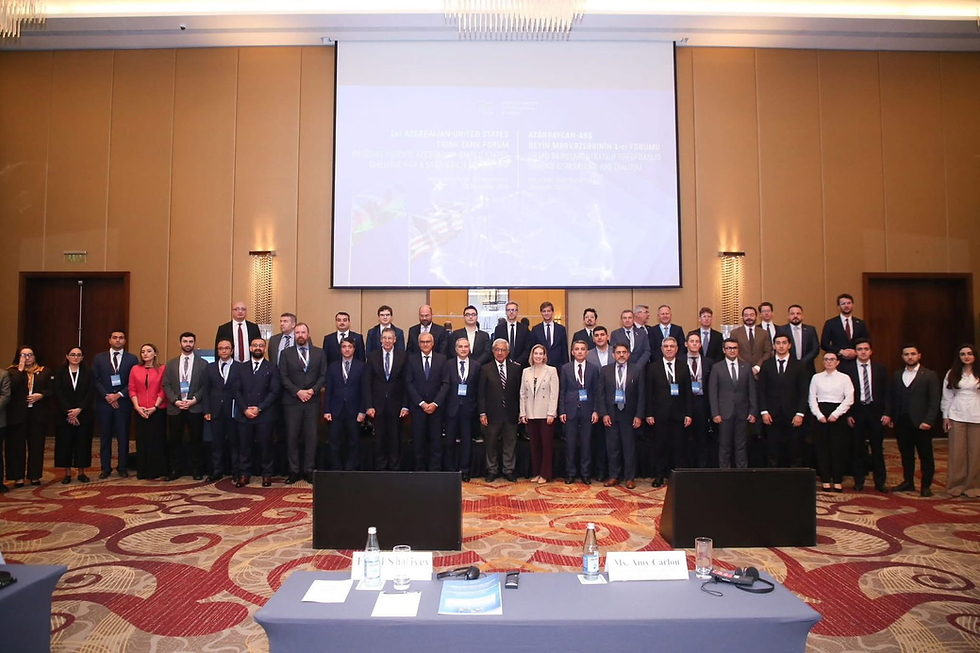
The first Azerbaijan-US Think-Tank Meeting took place in Baku on November 18, 2025. Its theme was “Shared Ideas: Azerbaijan–US Talk for Strategic Partnership.” It was a practical move toward setting up a regular discussion between Washington and Baku. The Center for Analysis of International Relations (AIR Center) organized the event to restart ties after Donald Trump became president and major agreements were signed in Washington.
The meeting gathered top US think tanks, like the Atlantic Council and the Hudson Institute, along with important Azerbaijani political and research figures.
Main Topics and Strategic Background
Discussions at the meeting centered on three important areas:
Washington Summit Review: Looking at the recent high-level Washington Summit and what it means for US-Azerbaijan ties.
The Peace Process: Studying the chances for peace between Azerbaijan and Armenia after the Washington agreements, including chances and risks for a peace deal.
Energy Security and Regional Connections: Talking about Azerbaijan's part in global energy security and new transport projects, like the TRIPP project, green energy, and digital links across Eurasia.
Participants, like John E. Herbst from the Atlantic Council, said that the peace deal started by Washington and the TRIPP project are seen as a way to keep a long-term US presence in the South Caucasus. This new plan fixes what many in Baku see as unfair policies of the past US administration on the Karabakh issue, bringing US strategy back to a more sensible approach.
Multiple Levels of Setup
The Baku meeting wasn't a one-time event. It was part of a well-planned, multi-level discussion to set up the new partnership:
Expert Level (Baku): The meeting created a place for research teamwork, showing Azerbaijan as more than just an energy or logistics center, but as a place for international research. The focus is turning from security to working together in areas like renewable energy and digital security, where Baku wants American investment.
Political Level (Washington & Baku): The meeting was supported by two other important activities:
An Azerbaijani group of politicians and experts, led by Samad Seyidov, went to Washington to set the new course with US leaders.
A US group, led by Deputy Secretary of State Alison Hooker, visited Baku to talk about regional stability and the possibility of a Strategic Partnership Charter. The US side announced plans for a group to write the agreement.
This two-level plan shows that the new Azerbaijani-American relationship is growing from leadership agreements to expert and political contacts.
Important Points and Limits
Even though the meeting was important for improving talks, there are some limits that might affect its real impact.
Observers note that Azerbaijan’s think-tank sector isn't very strong. Many local research centers are reportedly run by just one person or are tied to the government.
There are worries about research independence and money matters. Local think tanks depend on government ties, and there is international watch over Azerbaijan’s lobbying. Also, some foreign research groups have received money linked to Azerbaijani authorities. This raises questions about honest dialogue on these platforms.
For the partnership to work well, future plans need to focus on making funding sources more open, getting more independent experts involved, and building good research groups free from political influence.


Comments