Opposition activist on hunger strike in solitary confinement
- 2 days ago
- 2 min read
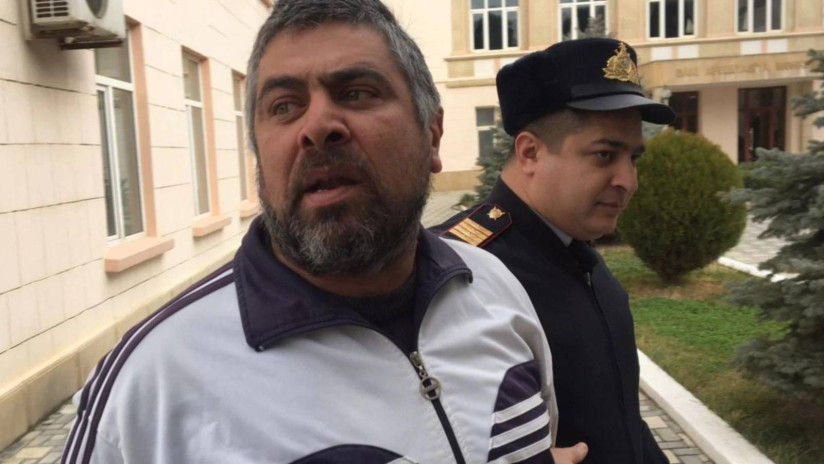
An imprisoned Azerbaijani opposition activist has gone on a hunger strike after being placed in solitary confinement, his family says.
Zamin Salayev, a prominent member of the opposition Azerbaijan Popular Front Party (APFP), was moved to a punitive isolation cell at Prison Number 11, according to his relatives.
His family said they had been unable to contact him for 10 days before discovering his relocation on Monday.
"My father has started a hunger strike there," his son, Oqtay Salayev, said. "His health problems are endless. They are effectively re-imprisoning a man who is already in prison."
Azerbaijani prison authorities and the Penitentiary Service did not immediately respond to requests for comment. Officials have previously maintained that all detainees are treated in accordance with domestic legislation.
Mr Salayev was sentenced to four years in prison in May 2023 on charges of hooliganism involving a weapon. He denies the charges, which his party describes as politically motivated.
He has previously served a prison sentence between 2020 and 2022 following a dispute with a local police officer, before being released early under an amnesty act.
Local human rights groups estimate there are currently more than 320 political prisoners in Azerbaijani jails.
The government in Baku routinely rejects these figures, insisting that no one is prosecuted for their political activities and that all detainees have committed recognized criminal offences.
Armenia's international internet traffic will be routed through Azerbaijan under a new transit agreement signed between the two Caucasus neighbours.
Azerbaijan's backbone internet provider, AzerTelecom, announced on Saturday that it had finalised a contract with Telecom Armenia to facilitate the transit.
The deal represents a highly symbolic step in the normalisation of relations between the two countries, which have been locked in a bitter territorial conflict for over three decades.
AzerTelecom said the agreement would help "diversify regional connectivity routes, increase the reliability of telecommunication networks, and develop regional cooperation."
Relations between Baku and Yerevan have thawed significantly since Azerbaijan fully restored its sovereignty over the Nagorno-Karabakh region following a swift military campaign in 2023.
The two nations signed a draft peace treaty in August last year, in which they formally recognised each other's territorial integrity and agreed to resume cross-border freight transport.
AzerTelecom, established in 2008, operates the primary fibre-optic network connecting Azerbaijan to the international internet.


Comments