Did the Summit Fail the Planet?
- Nov 25, 2025
- 6 min read
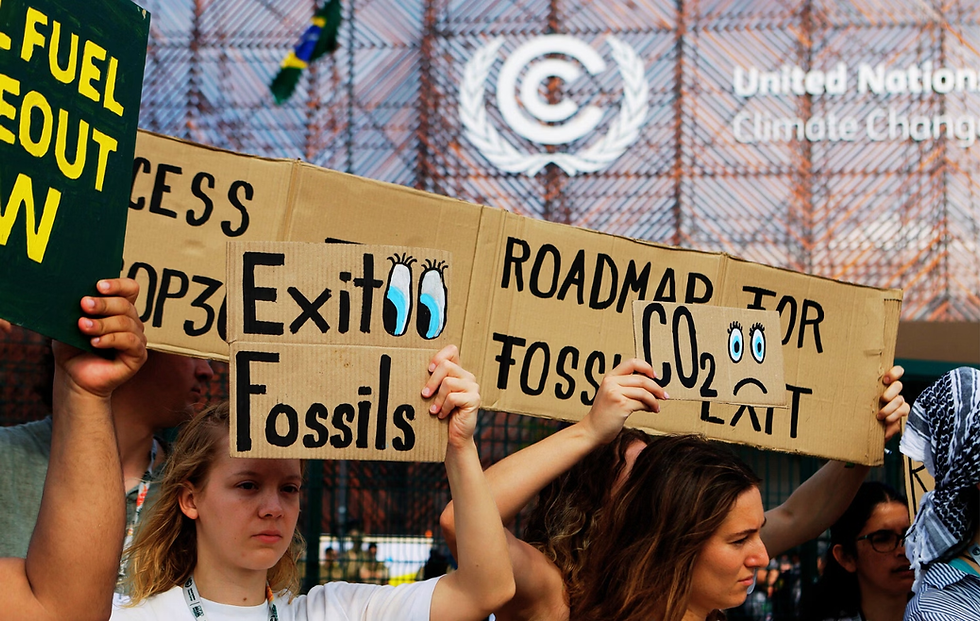
COP30, held in Belém, Brazil, deep in the Amazon, aimed to be a turning point. The location itself symbolized the urgency of addressing climate breakdown. But after two weeks of difficult talks, the conference ended with disappointment. Many see it as a missed chance to deal with global warming's main cause.
The summit stumbled due to three main issues: countries couldn't agree on phasing out fossil fuels, oil-producing nations had too much political and economic power, and the United States' absence created a divided world. Although smaller deals happened, they couldn't make up for the failure on the central issue.
The main problem was the disagreement on a global plan to move away from fossil fuels, something important promised two years ago.
The Main Failure: A Plan Going Nowhere
The test for COP30 was to turn the COP28 promise—a transition away from fossil fuels—into real action. It didn't succeed. After running late by over 18 hours, the summit produced a deal without a direct plan to keep the core promise.
The Group That Wanted Progress
Over 80 countries, from the Global North and South, pushed for real change. They wanted a clear plan to phase out fossil fuels, saying it was needed to limit global temperature rises to 1.5°C.
Tina Stege, the climate envoy for the Marshall Islands, supported by ministers from over 20 nations, pleaded, Let's support the idea of a fossil fuel plan, let's work together and make it happen.
This group said the plan wasn't just a side issue, but the conference's main goal. UK Energy Secretary Ed Miliband said, This is a group from all over the world saying that this issue can't be ignored. We all agree that this issue must be most important at this conference.
A Sad Ending
The final result was very disappointing. The Brazilian hosts started by refusing to even put the subject on the agenda. The final deal, passed after a messy last few hours, didn't directly mention fossil fuels, and the words transition away from fossil fuels were left out.
The summit ended in confusion and anger. Colombia's representative strongly opposed the weak text, stopping the final meeting for a while. In the end, the deal was pushed through, but it felt like a failure. COP30 President André Corrêa do Lago admitted that some delegates had more goals.
This failure didn't happen by accident; strong forces worked to block progress.
The Power in the Room: Oil States, Politics, and Lobbyists
The failure to get a fossil fuel plan was because of strong interests. Oil-producing countries and corporate lobbyists used their power during the two weeks to weaken the language and block real promises on reducing fossil fuels.
The Diplomatic 'Wrecking Ball'
The main opposition to a fossil fuel deal came from a predictable group of powerful states. French Environment Minister Monique Barbut said that oil-producing countries - Russia, India, Saudi Arabia, joined by many emerging countries blocked the deal.
Saudi Arabia, in particular, has been called the biggest blocker of climate action at UN summits. The kingdom's economy depends on oil, so a move away from fossil fuels is seen as a threat to its existence. Its strategy has been to delay and weaken international climate action at every opportunity. After the summit, oil-producing nations said they were happy with the result, re-stating their right to deal with climate change at their own speed.
The Corporate Influence
Powerful companies also worked hard to protect their interests. Their influence at COP30 defended fossil fuels and protected business models that cause deforestation.
An investigation showed that over 300 industrial agriculture lobbyists attended COP30. This group, representing cattle farming and commodity grains, which cause deforestation, was bigger than Canada's official delegation.
This corporate presence changed the talks. Susana Muhamad, Colombia’s former environment minister, said that UN climate talks have become a huge convention where the main focus is defending fossil fuels.
This state and corporate power was made worse by the absence of the world's biggest historical polluter.
The Geopolitical Shadow: A Summit Without the United States
COP30 happened in an unusual situation. For the first time in 30 years of UN climate talks, the United States had no official delegation. This created a big problem, especially for global leadership and climate finance.
The US absence was seen in two ways. Some were glad, thinking that the US wouldn't be there to block a deal. But most thought that the US absence created a big leadership gap. Brandon Wu of ActionAid USA said, The country isn't here, but it's affecting these talks, especially on finance.
UN Climate Chief Simon Stiell said that the conference took place in difficult political times full of denial, division, and geopolitics.
Other nations tried to take the lead. China, was seen taking the stage with a visible presence. Negotiators said that Chinese diplomats were actively helping to make compromises. Some observers now see China as a guarantor of the climate regime, because of its green investments and its interest in a stable world.
While political moves were happening, people on the front lines of the climate crisis faced urgent problems.
A Difference From Reality: Scientific Warnings and Public Anger
The political problems inside the conference halls contrasted with the growing climate crisis outside. There was a gap between the failures in Belém and the strong warnings from scientists and demands from the public.
The Scientific Background
The summit happened as 2024 was confirmed to be the hottest year ever. The global average temperature was 1.60°C above pre-industrial levels, a critical limit in the Paris Agreement.
Leading scientists warned the COP presidency that the world is already in danger, with suffering for billions of people and quickly approaching tipping points in ecosystems like the Amazon. They said that global emissions must be reduced by at least 5% per year starting now to avoid big problems.
The People's Verdict
This scientific urgency was seen in the streets of Belém, where many people demanded action. Large marches led by Indigenous people brought thousands out to protest. Dozens of Indigenous protesters, angry about being excluded, forced their way into the conference's blue zone to confront negotiators.
Tensions were high. Over 200 human rights and environmental groups accused UN climate chief Simon Stiell of encouraging a crackdown on Indigenous people that created a chilling effect on peaceful protest. Young activists demanded a “full, fast, fair fossil phase-out.” One young activist said that their motivation was simple: “Our future is being burnt down.”
While the summit failed on its main goal, there were a few positive results, but they were not enough.
Overshadowed Outcomes: The Summit's Few 'Wins'
Despite the disappointment, a few agreements were made at COP30. But they weren't enough to make up for the failure on fossil fuel reduction and were small compared to the overall problem.
The results include:
Adaptation Finance: Rich countries agreed to triple finance for poor countries to help them adapt to climate change. This agreement gives about $120 billion of the $300 billion climate finance goal to adaptation measures for the most at-risk nations.
Forest Protection: Brazil launched its Tropical Forest Forever Facility, a fund to help communities protect rainforests. The initiative raised $6.6 billion in pledges.
Methane and Super Pollutants: There was some progress on tackling methane and other super pollutants. This was seen as a way to quickly slow down climate change and get fast results.
While these steps are good, they aren't big enough. The new Loss and Damage Fund only has $250 million, which is not enough when countries in the Global South need hundreds of billions each year. COP30's achievements are a good start, but not enough.
This difference between goals and reality now defines the summit's legacy.
Conclusion: A Missed Chance in the Amazon
COP30, held in the Amazon, will be remembered for its failure to deal with the main cause of the climate crisis. It was a chance for change that was missed.
The strong opposition of oil states, made worse by a divided world and the US absence, stopped a real agreement on a fossil fuel transition. This has widened the gap between climate talks and the urgent action needed, as scientists say emissions must fall by 5% per year, starting now. The difference between the negotiators and the demands of the public has never been more clear.
The ongoing power struggle at COP30 now goes to future negotiations, leaving the world in danger as the climate crisis gets worse.


Comments